



Suffering and Shame: The Making of a Decent Cyclist (and Hopefully a Good Human)
Much has been written by cyclists on the topic of suffering. Jokes abound about heading out for two hours of VO2 efforts when a partner or loved one asks, “who hurt you?”
And yeah—maybe we do have a screw loose. The kind that makes us want to find the breaking point of our own abilities, or tack on one more hour just to make sure we arrive home properly shattered.
There’s no doubt that improving at any level of cycling requires a relationship with suffering. For some of us, that suffering is as much fun as the ride itself. Unhinged? Maybe. But unfamiliar? Not at all.
What I don’t see written about much is the other side of the coin: shame. The uniquely cyclist-flavored kind.
And I’m not talking about jersey-induced tummy rolls (which I have and hate), or the time I trained all year for the Tour of the California Alps—aka “The Death Ride”—only to flat mid-ride without a pump or CO2.
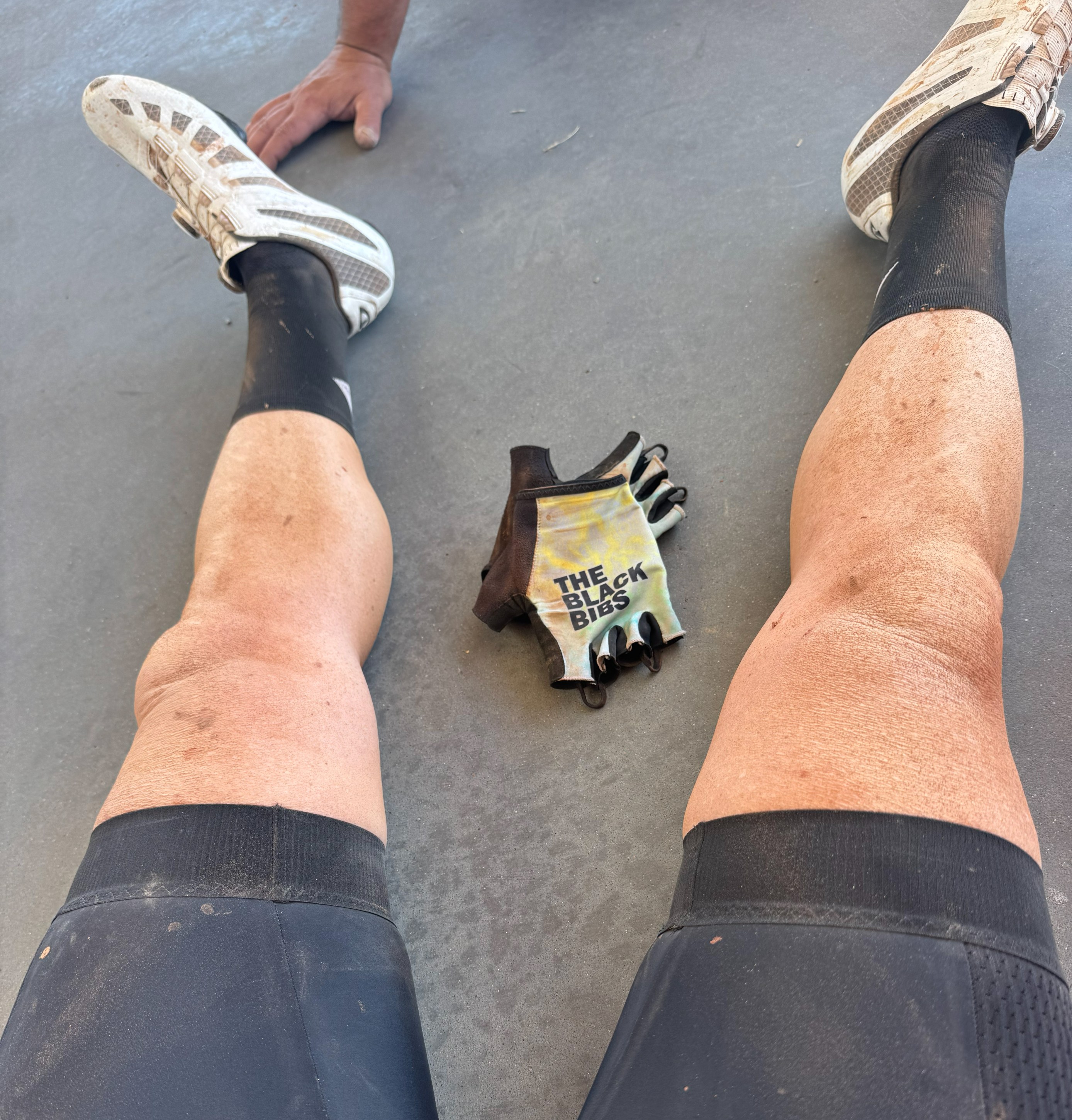
There I was, roadside, begging strangers for help. It’s been over a decade and I’m convinced the guy who loaned me his mini pump—and simultaneously chewed me out for my lack of preparation—is still fuming. I’m still a little ashamed.
But that’s not even the worst of it.
The deepest shame, as a lifelong cyclist, comes when you hit the deck and have to explain it to non-cyclists. That’s a different animal entirely.
It’s the walk of shame after yelling “FORE!” and then trudging over to the group you just smoked with a stinger. It’s tripping down a flight of stairs in a crowded airport. Public, undeniable, and entirely your fault.

Growing up, we rode mountain bikes with a kid we called “Torgy”—because back then everyone had a nickname. (What happened to that, by the way?) Torgy was a ripper… but he also had what we joked was a self-destruct button on his handlebars. The guy could be JRA—just riding along—and somehow end up on the ground.
We roasted him relentlessly.
Turns out, Torgy was just ahead of his time.
There’s an unspoken judgment that comes with crashing, especially within the cycling community. And it gets worse outside of it.
“Why are you always crashing?”
“For how much you ride, shouldn’t you be better at this?”
“Aren’t you getting a little old for bikes?”

Most of us deflect. “Cyclist tax.” “Just a dumb slide-out.” We offer something quick and harmless to move the conversation along.
What we want to say is usually far less gracious.
In early February, I got taken out at Huffmaster. I wrote about that already, so I’ll spare you the recap. I popped up, finished the race—poorly—and walked away mostly unscathed. No shame. Not my fault. Clean enough.
I’d love to say that was my crash for 2026.
It wasn’t.
A few weeks later, I was in Bentonville, Arkansas, for work. A few hours opened up between meetings, and I figured I’d sneak in a quick ride. If you’ve been there, you know—it’s basically Disneyland for off-road cyclists. Over 100 miles of immaculate singletrack calling your name.

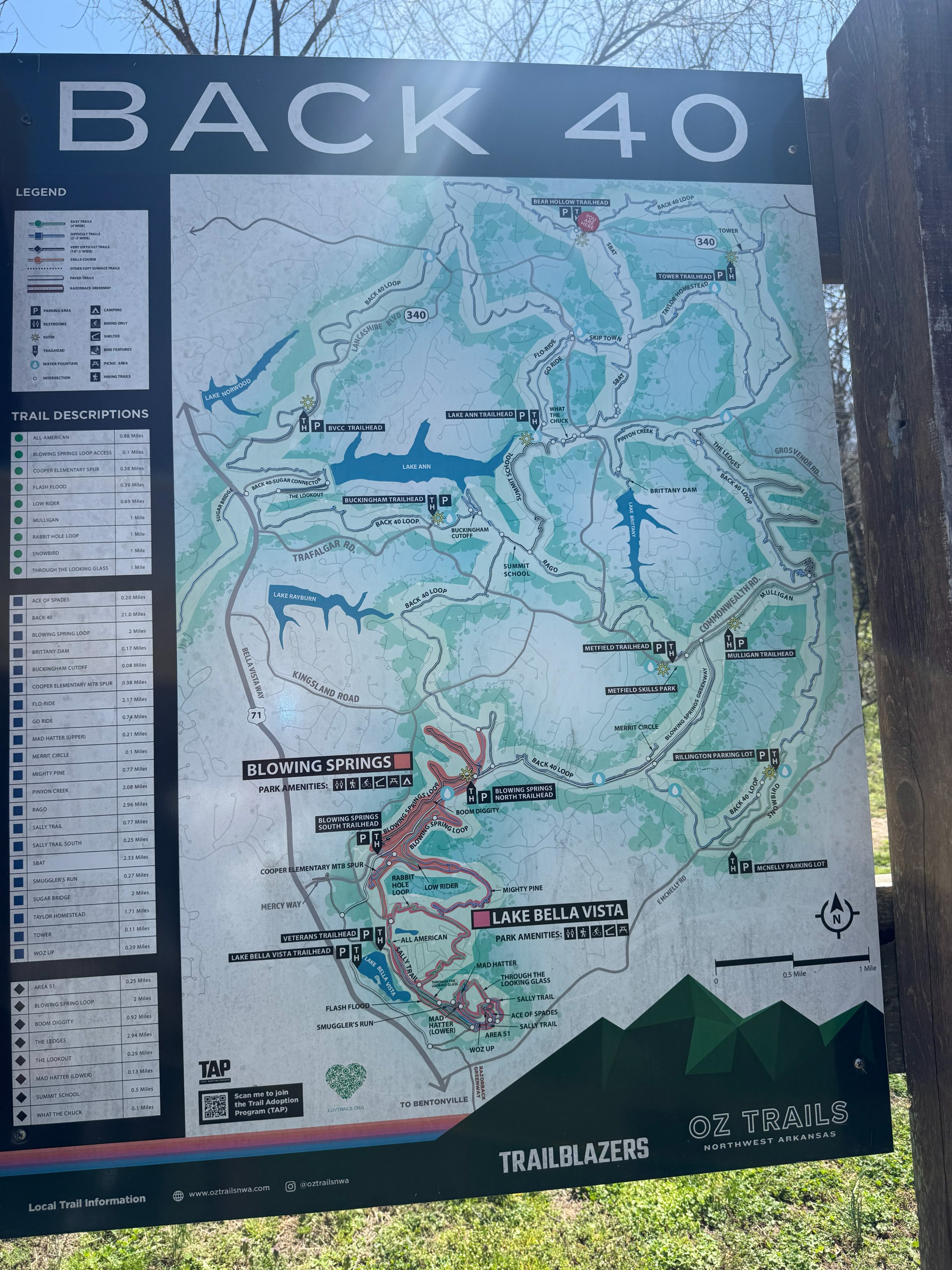
I don’t own a mountain bike these days, but I have a very capable TD4.2 that took a knobby set of 2.2s, aired them down like I was tackling the Rubicon, and set out for a “chill” loop.
Sea Otter was a few weeks away, and I remember thinking as I rolled out: You should wear gloves.
They were sitting right next to my helmet.
But I was in a hurry. And confident. The trail was mellow. Retirees on e-bikes, locals in business casual spinning out lunch rides. I told myself I’d take it easy. Just fresh air. Maybe some tire testing.
If you’ve ridden more than twice in your life, you already know how this ends.
Trail-side expletives. An ER visit. And a week of explaining, in various conference rooms, why I showed up looking like I lost a fight with a cheese grater.
“I thought the point of biking was riding, not crashing?”
Same.

I didn’t post about it. Didn’t share it widely. I waited until the stitches came out of my hand and my knee stopped barking with every pedal stroke before even acknowledging it.
Sea Otter was looming, and all I could think while picking gravel out of my hip, elbow, shoulder, and hand was:
That first climb up Laguna Seca is going to hurt a lot more than I planned.
Cycling will humble you. If it’s not your reflection in a kit, it’s forgetting a pump. If it’s not that, it’s a crash. If it’s not that… just wait.
But here’s the thing.
What keeps me coming back—through the embarrassment, the self-inflicted wounds, the occasional public humiliation—isn’t just the suffering.
It’s what the suffering (and yes, the shame) builds.
When I crashed, blood was pumping out of a three-inch gash in my palm, and my first thought—ridiculous as it sounds—was:
How do I wrap this so I can finish my ride without ruining my white shoes?
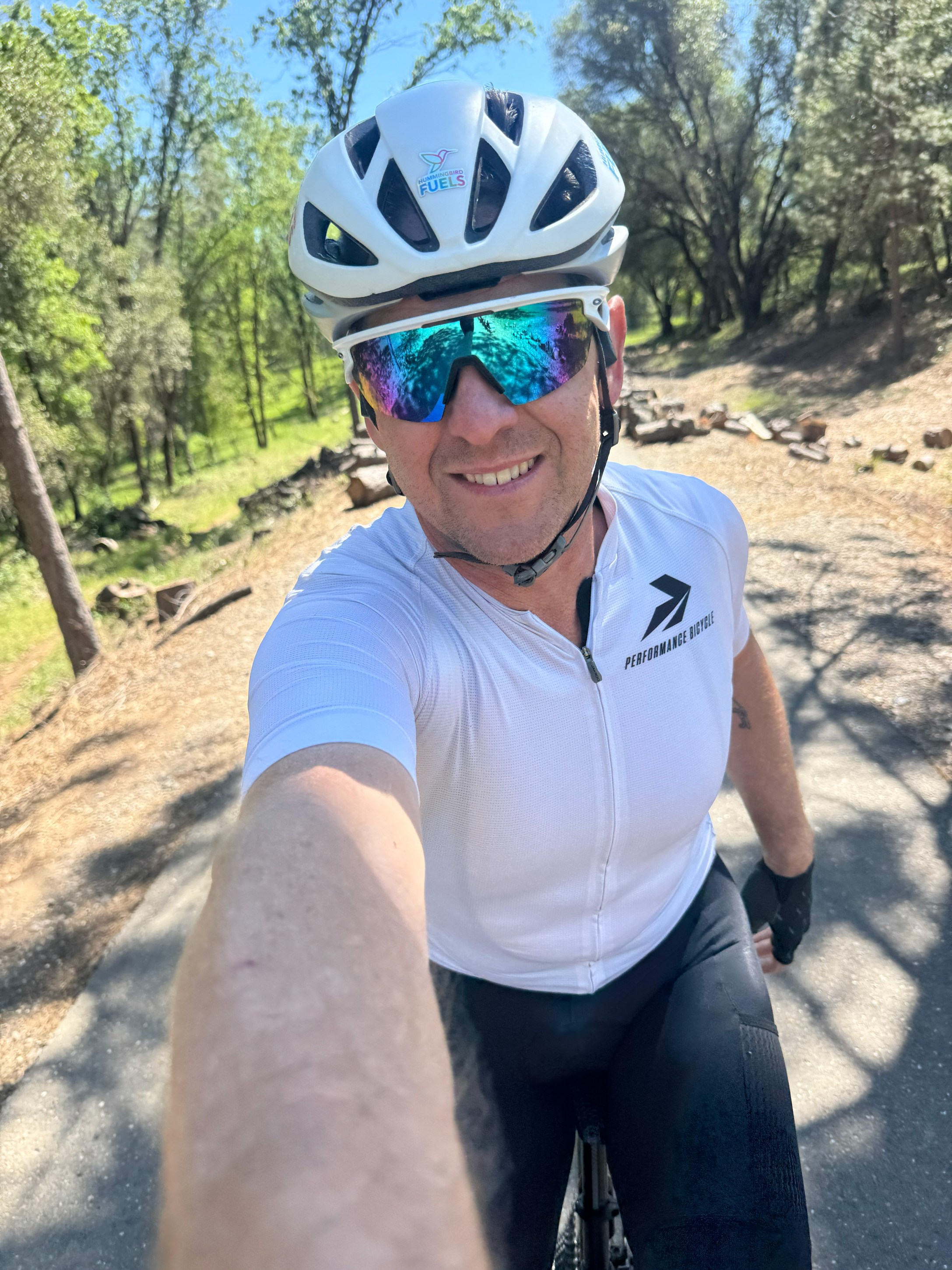
What other sport rewires your brain like that?
I didn’t want to be done. The trail was too good. (Back Forty Loop out of Bella Vista, if you need a route.) I wasn’t missing the back half.
So I improvised.
Dug into the frame storage on my TD4.2. Found the paper towel I’d wrapped around my multi-tool and CO2—lesson learned from the Death Ride. Used it as a bandage. Wrapped a red shop rag around my hand like a makeshift ace wrap. Pulled electrical tape off my seatpost to cinch it down.
It throbbed. I couldn’t grip the hoods. But I finished the ride.
That’s the part we don’t tell non-cyclists. And funny enough, they never ask, “how’d you get out of there?”
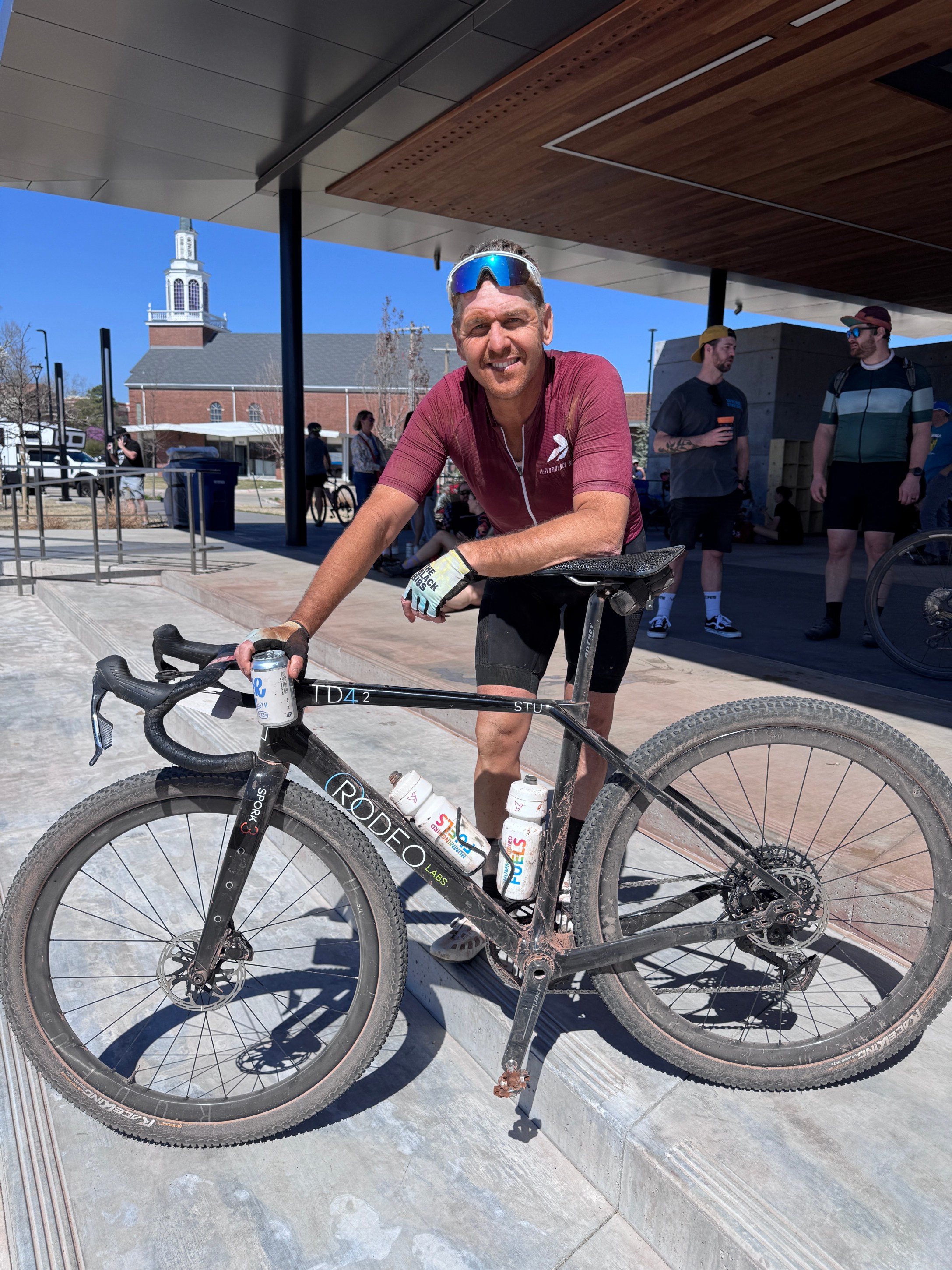
These “bush fixes”—what my dad would call “shade tree mechanic” moves—tap into something deeper. Problem-solving under pressure. Adaptability. A kind of stubborn perseverance most people don’t have much reason to develop.
And even for those who do, I’d bet they’re not doing it with a heart rate of 150, sweat dripping into an open wound, and exposed tendons making a guest appearance.
The suffering part of cycling is obvious. Anyone can see it. Whether they understand it is another matter.
But the shame? The quiet, humbling, ego-checking moments?
Those are doing work too.
They’re building something in us. On the bike, sure. But off the bike as well.
So here’s to more suffering. And yes, even a little more shame.
But if I can help it, I’ll be keeping the rubber side down the rest of the year.


One response to “Suffering and Shame: The Making of a Decent Cyclist (and Hopefully a Good Human)”
So true… we’ve all been there. On a recent trip to Japan, we were on guided bike tour and me being the “experienced cyclist” brought up the rear. Well as we were cycling in and around Fukuoka, I was taking in the sights and failed to notice that our group had come to a stop. I swerved to avoid crashing into my wife and ended up on the ground. Body and ego bruised I did what any self respecting cyclist would do, I blamed my wife!